

|

|
|
Recent Blog Posts
DUI Consequences for Underage Illinois Drivers
 Drinking and driving can have serious consequences for any driver, but those under the age of 21 have the additional burden of a zero tolerance law. Underage drivers also have slightly different (and more severe) penalties than adults if they are caught driving while intoxicated. The following explains the potential consequences of an underage DUI. It also provides some valuable information on how they might be avoided, should an arrest occur.
What is the Zero Tolerance Law?
For non-commercial drivers over the age of 21, the legal limit of intoxication is a BAC of 0.08 or higher. Drivers under the age of 21 are held to a much higher standard because they are not of legal age to drink. This standard, which is known as the zero tolerance law, states that they can be penalized with a DUI if they have any trace of alcohol in their system. In other words, they cannot surpass a 0.00 BAC.
Understanding the Consequences of Child Pornography Charges in Illinois
 Sex crimes, in general, are severely punished in the state of Illinois. However, those that pertain to children often receive the heaviest of consequences. This includes (but is not limited to) the possession, distribution, and production of child pornography. Of course, not all cases are as clear-cut as they seem. So, if you or someone you love is up against child pornography charges, learn the consequences, along with what you may be able to do to protect yourself from them.
What Constitutes Child Pornography?
The term child pornography is a broad one, covering all types of media that depict a child (anyone under the age of 18) or disabled person engaging in a sexual act or a simulated sexual activity, including any acts involving penetration, oral sex, masturbation, sexual touching or fondling, and/or urination or excretion of a sexual nature. Owning, distributing, purchasing, possessing, creating, sharing, or selling any such content is illegal in the state of Illinois. So is the act of coercing, soliciting, persuading, enticing, or forcing a child or severely intellectually disabled person to create any such content.
Impending Holiday Season Means DUI Checkpoints – What You Should Know
 The holidays are just around the corner. There will be turkey and stuffing, family and friends, spiked eggnog and wine. To keep everyone safe, there will also be DUI checkpoints. Able to put you or someone you love in jail when you should be spending time together, these calculated stops to check for intoxicated drivers are the thorn of the holiday season. The following information can help you avoid this frightening and unfortunate fate this year.
Are DUI Checkpoints Constitutional?
One of the most common questions asked about DUI checkpoints is whether they are considered Constitutional or not. After all, at first glance, it appears that they directly violate the Fourth Amendment, which protects citizens from unreasonable searches and seizures. However, the U.S. Supreme Court has ruled otherwise. DUI checkpoint stops remain Constitutional if they are conducted legally and not done arbitrarily, or for purposes other than those pertaining to government (i.e. keeping the roads safe). It is also important to note that they may not violate any other rights of citizens.
What the State Does Not Want You to Know About Sobriety Testing
 When you are arrested on a DUI (driving under the influence), your license is automatically suspended unless you choose to fight back. Would you really fight, though, if you know that you did drink, got behind the wheel, and tests showed you to be over the legal limit? Maybe not. In fact, many drivers in the same situation simply accept their “punishment.” Yet some of these drivers may not have ever been over the legal limit. The test may have simply been inaccurate. Sounds crazy, right? It is actually more common that you might think.
Field Sobriety Tests
Field sobriety tests have long been the standard test for establishing reasonable suspicion of intoxication while driving. What officers will not tell you is that this test is not easy to complete, even when you are sober. In fact, a couple of years ago, NBC asked some people walking around the mall to do the field sobriety test. All of them failed in one area or another. Some were just not very balanced people. Others were just too tired to focus enough mental energy on the verbal aspects of the test. Add in nervousness and a late-night stop into the mix, it is no wonder so many people fail this test.
When a DUI Charge Includes the Death or Injury of Another
 All DUI charges are serious matters, but those that involve the death or injury of another can result in heightened penalties. Just how serious can these consequences be? It depends on the situation. However, there are general guidelines, laws, and statutes that can help explain what you may be up against in a DUI that has caused death or bodily harm.
Death and Injury in a DUI Accident
If, while intoxicated, you are in a crash that causes bodily harm, death, or disfigurement to another person, it is generally considered an aggravating factor in your case. The weight that it will be given may vary, depending on the level of harm that was caused. Further, it is important to understand that each death or injury is considered a separate count, and that even an unborn fetus may be considered a separate count. More weight may also be given to the death or injury if you are on a subsequent DUI, rather than a first-offense DUI.
Judge Rules a Doctor’s Profession is an Aggravating Factor in DUI, Not a Mitigating One
 While a DUI conviction can damage anyone’s reputation, livelihood, or financial situation, those that are licensed medical professionals are considered to be at an especially high risk for serious consequences. They can lose their license to practice, and, as evidenced in a recent DUI case involving an Illinois physician, their profession could actually be used against them. If you are a licensed medical professional who was recently arrested for a DUI, learn how you can best protect your future.
Using Your Duty to Protect Against You
As a healthcare professional, you have an implied, and in some cases, sworn duty to protect the public from harm. Driving under the influence of any substance, including alcohol, marijuana, prescription drugs, or other illicit substances, is in direct conflict with that duty. For this reason, the court may see your standing in the community as an aggravating factor in your DUI case, rather than a mitigating one. This is exactly what happened to a local orthopedic surgeon who was recently convicted of his seventh DUI and sentenced to six years in prison.
Illinois' DUI Laws and Medical Marijuana: What You Need to Know
 In 2014, the medicinal use of marijuana became legal in the state of Illinois. State law also made a provision for these users that is supposed to protect them if they choose to drive while not directly under the influence. Are they really protected, though? Like all things, it really just depends. Some might even argue that medical marijuana users are at an even higher risk of being charged with a DUI. The following information explains, and it can help you understand what to do if you are facing such charges.
Driving Protection to Medical Marijuana Users? Not Quite
While, in theory, the Medical Cannabis Act gives you the ability to drive with trace amounts of the drug in your system (supposedly without the fear of litigation), reckless driving of any sort could put you at risk for a DUI. As an example, holding a registry card is not supposed to be considered enough to constitute reasonable suspicion. Yet, if you pair that registration card with running a red light (even entirely sober), the officer can cite reasonable suspicion and require you to complete a field sobriety test. Of course, passing the test should be easy, as long as you are not under the influence, right?
Fighting a DUI in Illinois – Using Reasonable Doubt to Gain Leverage in Your Case
 Often, drivers who are arrested on a DUI assume that the evidence against them is irrefutable, and that they must simply accept the consequences of conviction. Nothing could be further from the truth! In fact, there are many defenses that may be used to raise suspicion in your case. Learn more about reasonable doubt, and how you may be able to use it as leverage in your defense.
Why Reasonable Doubt is So Important
Because the prosecution is burdened with proving your guilt beyond a reasonable doubt, suspicion can, in some cases, be enough to have your charges dropped. This is a Constitutional right provided to all Americans, and it was enacted to ensure that innocent people were not wrongfully convicted of crimes they did not commit. Yet, raising that suspicion requires extensive knowledge in the legal field, and in the policies, procedures, and testing used to convict DUI offenders. This is why the assistance of an attorney is critical in the fight against your charges.
DUI Conviction and the BAIID - What It Means to Have a BAIID in Your Car
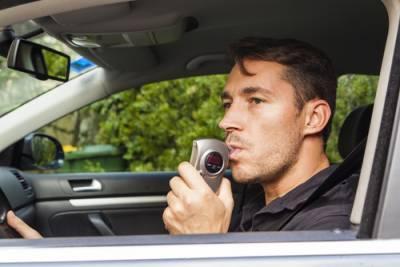 In the state of Illinois, even first-time DUI offenders are at risk for a suspension of their driving privileges. Some are able to regain restricted driving privileges through a Monitoring Device Driving Permit, or a Restricted Driving Permit. Both options require the installation of a BAIID (Breath Alcohol Ignition Interlock Device) on the offender’s vehicle. Learn what it really means to have one of these devices in your vehicle, and how you may be able to avoid the consequences of a DUI conviction.
What is a BAIID and How Does It Work?
A BAIID is basically a breathalyzer for your car. You must blow into it each time you start your vehicle, and even as you are driving down the road. Should you fail to test below the device’s pre-set limits (.00 to .024 BAC), your vehicle will not start. If you blow three or more tests with a 0.25 or higher, then your vehicle will be locked out for 24 hours. If you blow above 0.05, then you will be flagged for a violation. Every violation, blow, and lockout is recorded and will then be detected when you take the device in for monitoring (required every 30 days, or sooner if you are locked out of your vehicle).
Arrested for a Traffic Violation? It Can Happen!
 Most people associate traffic violations with consequences like monetary fines and heightened insurance premiums. Of course, all of these penalties are possible. However, there are other, heavier consequences that most people fail to consider. Believe it or not, you can be arrested for a traffic violation. More than that, you could face criminal charges that have the potential to significantly and negatively affect your overall quality of life. If you have been arrested for a traffic violation, know the potential consequences and how you can best protect yourself from them.
Driving Under the Influence
As probably the most commonly experienced traffic violation that leads to criminal charges, driving under the influence violations (DUIs) can have a serious impact on your life. Even on a first offense, convicted DUI drivers lose their license for a year. They also receive a misdemeanor charge on their criminal record, which can somewhat limit their ability to find and/or retain gainful employment. If you are being charged with a DUI, protect your license and contact a skilled criminal defense lawyer.
CALL US TODAY AT 847-253-3400 FOR A FREE INITIAL CONSULTATION
Client accused of burglary was acquitted due to our skillful cross examination of eye witness identification.
Client accused of causing the death of another while driving under the influence - Acquitted.
Client accused of first degree murder - Acquitted.
Client accused of embezzlement - Charges never filed.
Hundreds of Secretary of State hearings for Drivers License Reinstatement - Won.



121 S. Wilke, Suite 301, Arlington Heights, IL 60005
847-253-3400
