

|

|
|
When Are Drug Possession Charges Elevated to Possession with Intent to Deliver?
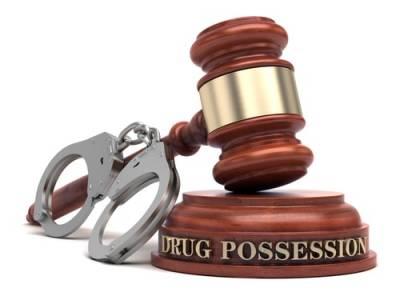
Getting charged with drug possession in Illinois is bad enough. Depending on the type of drugs that are in your possession, you may face jail time, hefty fines, and a permanent criminal record. However, if your drug possession charges get elevated to possession with intent to deliver, you face even harsher consequences. If you are currently in this situation, it is critical to avoid talking to the police and consult a skilled lawyer promptly.
Our Arlington Heights, IL drug crime defense attorney has over 25 years of experience in criminal law. We can review your case in detail and question if the prosecution’s argument holds water.
What Does "Intent to Deliver" Mean in Illinois Drug Possession Cases?
In some cases, the police may decide to raise a regular drug possession charge to a possession with intent to deliver charge. You may be charged with intent to deliver based on certain evidence, including:
-
Drugs found in bags
-
The presence of measuring devices like scales
-
Large amount of drugs in your possession
-
Large amounts of cash lying around
Proving intent is challenging, and it leaves room for an experienced criminal defense attorney to poke holes in the prosecution’s case.
How Does Illinois Law Treat Possession With Intent to Deliver in 2026?
Under 720 ILCS 570/401, it’s illegal to knowingly manufacture or deliver a controlled substance, or to possess it with the intent to manufacture or deliver it. The law places actual delivery and possession with intent to deliver in the same statute, and state law punishes them on the same penalty scale.
That matters because the state does not always need to prove that a hand-to-hand sale actually occurred. A prosecutor may instead argue that the facts show an intent to deliver. In other words, the charge can rest on how law enforcement interprets the surrounding evidence.
How Does the Type of Drug Affect an Intent to Deliver Charge in Illinois?
Illinois uses a scheduling system for controlled substances, and the law treats some drugs as more serious than others. In general, drugs are grouped into schedules based on things like accepted medical use and potential for abuse.
Different substances have different penalty ranges. For example, substances, such as heroin, cocaine, fentanyl, and certain other narcotics, can lead to very serious felony charges. Other controlled substances may still lead to delivery charges, but the penalty structure may be different.
How Does the Quantity of the Drug Affect Intent To Deliver Charges in Illinois?
In Illinois drug delivery cases, the quantity of the substance can sharply affect the level of the charge. As the alleged amount goes up, the charge often becomes more severe.
Quantity also affects how the state frames the case. Prosecutors often argue that a larger amount supports an inference of intent to deliver. Their point is usually simple: the more drugs a person allegedly had, the less likely it was for personal use alone. That argument may or may not fit the facts, but it is common in these prosecutions.
Still, it is not always as simple as it sounds. A case may involve disputes about testing, lab results, mixtures, packaging, or whether the state can prove the full amount it claims. In some cases, challenging the alleged weight can make a major difference in the possible sentence.
What Is the Standard of Proof in Illinois Drug Distribution Cases?
A drug distribution or intent to deliver case is still a criminal case. That means the state must prove guilt beyond a reasonable doubt. That standard is important because these cases often depend on assumptions. The state may point to packaging, text messages, cash, travel patterns, or statements made during an arrest. However, suspicion is not enough.
The prosecution must present reliable evidence that convinces the judge or jury beyond a reasonable doubt that the defendant knowingly possessed the substance and intended to deliver it. If the evidence is weak or inconsistent, the defense may have strong grounds to challenge the case. In many Illinois drug cases, the real fight is also about what the state can actually prove.
Challenging Accusations of Possession and Access in Drug Delivery Cases
In many drug delivery cases, one of the biggest questions is who actually possessed the drugs. Under Illinois law, the state usually needs to show more than simple presence. A person can be near drugs without owning them, knowing about them, or having the power to control them. For example, being a passenger in a car where drugs are found does not automatically prove possession.
The state may try to argue that a person had both possession of the drugs and the intent to deliver them. However, if access to the area was shared, or if the evidence does not clearly link the drugs to one person, that can weaken the case. A defense attorney may look closely at where the drugs were found, who had access to that space, and whether anything truly ties the accused person to the substance.
What Happens if Police Conduct an Illegal Search During a Drug Arrest in Illinois?
If the police conduct an illegal search, the evidence they found may be thrown out. This can be a major issue in a drug arrest. Many drug cases depend heavily on what the police claim they found during a traffic stop, a pat-down, a car search, or a search of a home.
The Fourth Amendment protects people from unreasonable searches and seizures. In general, police need a valid reason to stop someone, search property, or enter a private space. There are exceptions, but officers still have to follow the law.
If they do not, a defense lawyer can ask the court to suppress the evidence. That means the prosecutor may not be allowed to use the drugs, cash, phone records, or other items taken during the search. In some cases, once key evidence is excluded, the state may have trouble moving forward with the charge at all.
Contact an Arlington Heights, IL Drug Crimes Defense Attorney Today
If you have been charged with drug possession with intent to deliver, it is important to discuss your case with a Rolling Meadows, IL criminal defense lawyer. Scott F. Anderson, Attorney at Law has years of experience defending people who are facing drug charges and is here to assist you. Call 847-253-3400 to schedule a free consultation.
CALL US TODAY AT 847-253-3400 FOR A FREE INITIAL CONSULTATION
Client accused of burglary was acquitted due to our skillful cross examination of eye witness identification.
Client accused of causing the death of another while driving under the influence - Acquitted.
Client accused of first degree murder - Acquitted.
Client accused of embezzlement - Charges never filed.
Hundreds of Secretary of State hearings for Drivers License Reinstatement - Won.



121 S. Wilke, Suite 301, Arlington Heights, IL 60005
847-253-3400
